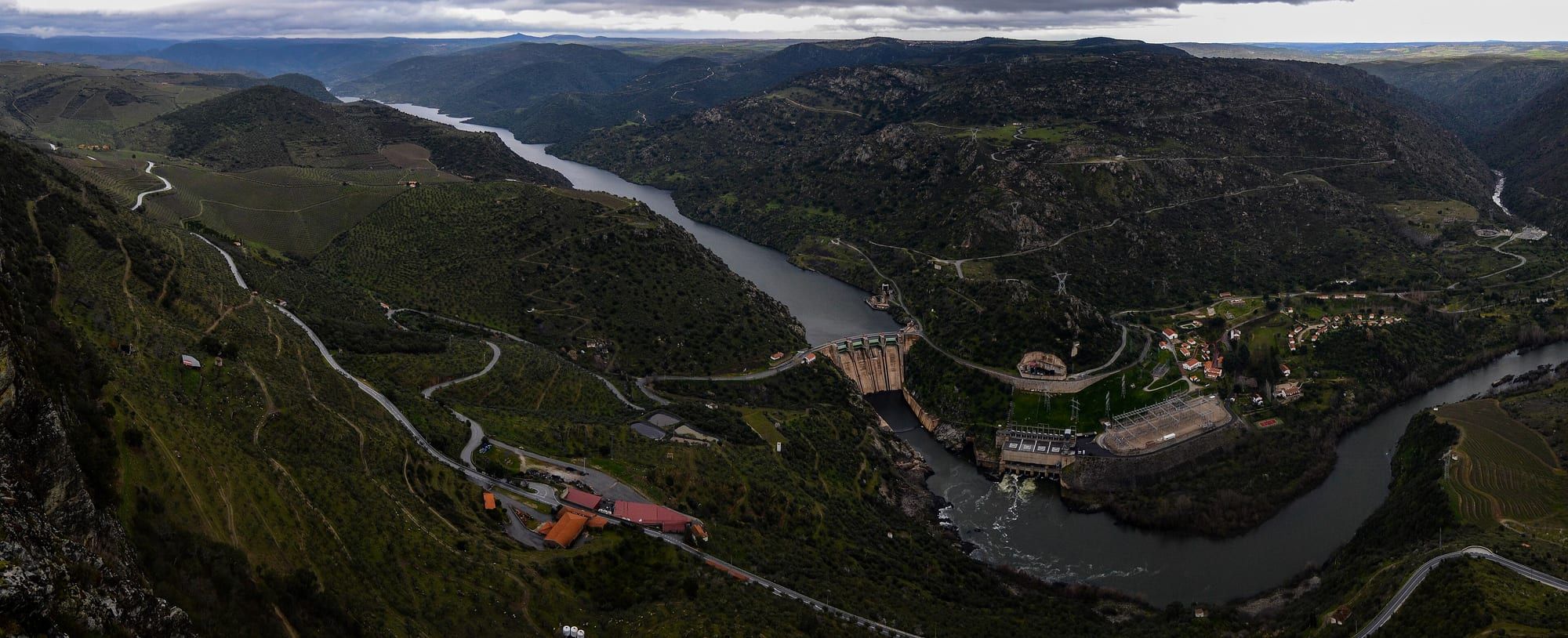
Hiking trails in Foz Côa: the Côa boardwalks, the GR45 and valley walks
What you can walk from Foz Côa, with distances, climbs and starting points checked against each trail's official source, and what still has no published information.
In short
Vila Nova de Foz Côa has two confirmed hiking routes: the Côa boardwalks (Passadiços do Côa), 930 m and 890 steps between the Côa Museum and the old Côa station, and the last two stages of the Côa Valley Grand Route (GR45), from Algodres to Castelo Melhor (10.2 km) and from there to the Côa Museum (11.6 km). From June to September, walk only in the morning.
Practical information
- Closest
- Côa boardwalks: 930 m, 1.7 km from the quinta
- Grand Route
- GR45, 196 km waymarked, 11 walking stages, white and red markings
- Stages in Foz Côa
- 10 (Algodres to Castelo Melhor) and 11 (Castelo Melhor to the Côa Museum)
- Best season
- Spring and autumn
- Heat
- Average July maximum of 33.4°C in Mirandela (IPMA, 1991 to 2020)
- Foz Côa tourist office
- +351 924 448 312 · turismo@cm-fozcoa.pt
- Emergency
- 112 · wildfires 117
In this article
There are two confirmed hiking trails in Vila Nova de Foz Côa: the Côa boardwalks (Passadiços do Côa), with 930 m and 890 steps between the Côa Museum and the old Côa station, and the last two stages of the Côa Valley Grand Route (GR45), which reaches the Côa Museum after 196 km from the river’s source. The stage before them, number 9, crosses Faia Brava Nature Reserve. Between June and September the valley is very hot, so walk in the morning.
Distance and difficulty of each trail
GR45 times are those given on the official website. GR45 difficulty is rated from 0 to 5.
| Trail | Type | Distance and time | Difficulty | Start | From the quinta |
|---|---|---|---|---|---|
| Côa boardwalks | Linear, wooden steps | 930 m, 45 min (1.9 km there and back) | Hard: 890 steps, 164 to 324 m | Côa Museum | 1.7 km, 10 min by car or 25 min on foot |
| GR45, stage 11 | Linear | 11.6 km, 3 h | 4 | Castelo Melhor | 14 km, 20 min |
| GR45, stage 10 | Linear | 10.2 km, 2 h | 3 | Algodres | 26 km, 35 min |
| GR45, stage 9 (Faia Brava) | Linear | 12.8 km, 3 h | 3 | Cidadelhe | 40 km, 60 min |
Côa boardwalks (Passadiços do Côa)
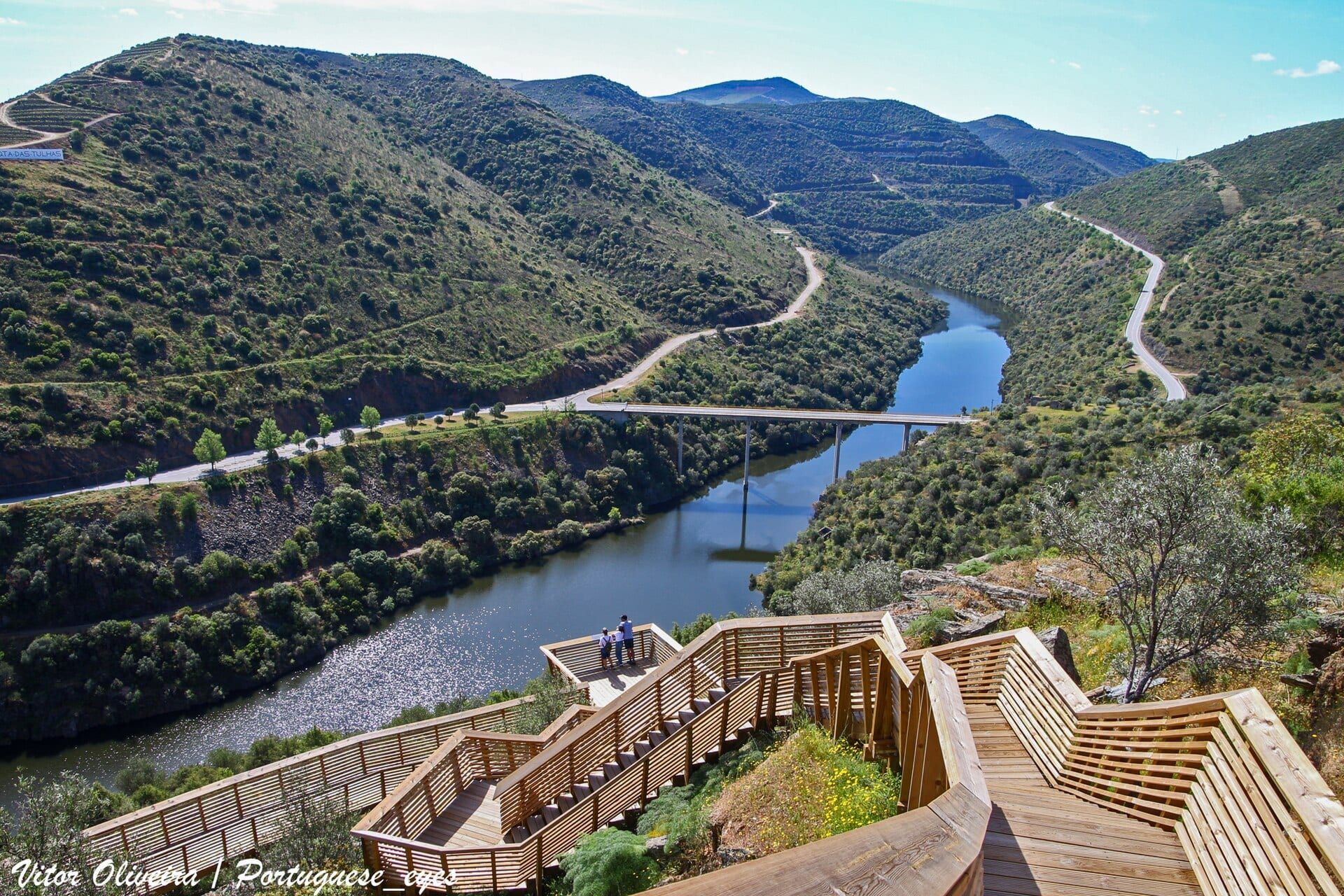
The boardwalks were opened by the town council on 9 September 2022 and link the Côa Museum with the disused Côa railway station, near the point where the Côa flows into the Douro. They are 930 m of timber and 890 steps between 164 and 324 m above sea level, with views over both rivers, the terraced vineyards of the Alto Douro Wine Region and a dovecote beside the path. The council gives an average time of 45 minutes and rates the difficulty as hard.
How to get there and in:
- Park on the upper level of the Côa Museum.
- Go in through the lower part of the building, by the bar-restaurant, or walk down the slope to the left of the building.
- Walk down to the Côa station and come back the same way, this time uphill.
The official website does not mention tickets or opening hours. The council asks for closed shoes (no flip-flops), water, children supervised at all times, nobody off the boardwalk, and quiet, with no music players. Smoking and lighting fires are banned; if you see smoke, call 117. The council writes that between June and September the slope becomes “extremely hot and dry” and recommends walking it in the morning.
Côa Valley Grand Route (GR45)
The Grande Rota do Vale do Côa, or Côa Valley Grand Route, is the GR45. In Portugal, GR stands for Grande Rota, a long-distance waymarked trail. This one is linear and follows the river from its source in the Serra das Mesas (Fóios, Sabugal) to its mouth at Vila Nova de Foz Côa. It has 196 km of waymarked trail, or 224 km if you count the detours to the villages where you spend the night. On foot it is divided into 11 stages and takes 10 to 15 days; by bike it takes 3 to 6 days, with its own mountain-bike detours. It is waymarked in both directions, in white and red, and is managed by Territórios do Côa, a regional development association based in Vilar Formoso (+351 914 506 242, territoriosdocoa@gmail.com). The GPX and KMZ files for each stage can be downloaded from the official GR45 website.
The website rates the route as difficult to very difficult and recommends spring and autumn. Three stages are close to Foz Côa.
Stage 11: Castelo Melhor to the Côa Museum
11.6 km, about 3 hours, difficulty 4, with 566 m of total ascent and 615 m of total descent. The stage leaves from the Archaeological Park reception centre in Castelo Melhor and follows walled tracks between olive groves and vineyards, with an unmarked detour to the São Gabriel chapel, a viewpoint over the valley. It goes through the village of Orgal, zigzags down through vineyards to the road bridge over the Côa, near the lowest point of the stage (127 m), and climbs the Vale do Forno along an old walled cobbled path to the Côa Museum. The stage description warns that some points are hard to navigate: carry the GPX on your phone.
Stage 10: Algodres to Castelo Melhor
10.2 km, about 2 hours, difficulty 3, with more downhill than uphill (161 m of ascent, 310 m of descent). The stage leaves Algodres through meadows and woodland, passes the Olga Grande archaeological site and goes through Almendra, which has a café and a restaurant, before reaching Castelo Melhor among olive groves and vineyards. Castelo Melhor is where visits to the Penascosa rock art site start; they must be booked in advance with the Côa Museum, as our guide to visiting the rock art explains.
Stage 9: Cidadelhe to Algodres, through Faia Brava
12.8 km and about 3 hours, on forest tracks and footpaths among cork and holm oaks, with the Côa cliffs in view. This is the stage for anyone who wants to see griffon vultures and other birds of prey. The details, including how to book a guided visit, are in our article on Faia Brava Nature Reserve.
Castelo Velho de Freixo de Numão
Castelo Velho is a fortified settlement around five thousand years old, from the Copper Age, with two rings of walls and a central tower, and was reoccupied in the Bronze Age. It stands on a schist hill above the Santo Amaro road in Freixo de Numão and has been listed as a Sítio de Interesse Público (Site of Public Interest) since 2010. You visit it along a wooden boardwalk around the ruins, built when the site was turned into an open-air museum, and the full circuit fits into a short stop. Opening times and access conditions are not published; check with the tourist office before you go.
Short trails (PR) in the municipality
The GR45 website says there are waymarked short trails in the Foz Côa municipality, known as PR (Pequena Rota, Portugal’s name for short waymarked trails), some of which share sections with the Grand Route. PR trails are marked in yellow and red, and GR trails in white and red; at junctions, a cross marks the wrong way.
In November 2026 the walking trail page on Explore Foz Côa, the town council’s tourism portal, still says “more information soon”. We found no current official list with names, distances and the state of the waymarking, so these short trails are not in the table. Ask at the tourist office (Posto de Turismo), Avenida Gago Coutinho e Sacadura Cabral 9, open every day from 9am to 12.30pm and from 2pm to 5.30pm (+351 924 448 312, turismo@cm-fozcoa.pt).
When to walk: the heat from June to September
On summer afternoons it is too hot to walk in these valleys. The station of IPMA, the Portuguese weather service, with recent climate normals that best matches these valley floors is Mirandela, at 250 m above sea level in the Tua valley. Between 1991 and 2020 the average maximum was 30.0°C in June, 33.4°C in July and 33.2°C in August. On average there are 12.7 days in July and 11.4 in August above 35°C, and the highest temperature recorded was 43.5°C, on 3 August 2018. On the Figueira de Castelo Rodrigo plateau, at 635 m, the average July maximum is 30.1°C (1981 to 2010). The trails drop down to the river, below 200 m, where the heat is worse than on the plateau.
In practice:
- March to May and October to November are the best months. The almond trees blossom between February and March; see our guide to almond blossom.
- In summer, start at sunrise and finish before 11am.
- July to October is the critical wildfire period: on days of high or maximum risk, access to parts of the GR45 may be restricted.
- In winter, avoid rainy and stormy days: some sections are slippery and there are streams to cross.
Our guide to the best time to visit Foz Côa goes through the year month by month.
Before you set off
The Grand Route rules work for any trail in the area:
- Carry water for the whole route: there are long stretches without drinking water, and village fountains are not tested.
- Take the map or the GPX, boots, a hat and waterproofs.
- Tell someone where you are starting and when you expect to be back, and avoid walking alone.
- Close any gates you go through and respect private property.
- Do not camp outside authorised sites, and take your rubbish with you.
- In an emergency call 112; for wildfires, 117; for SOS Ambiente e Território (environmental emergencies), 808 200 520.
From Quinta Alto da Fraga
The quinta is on Rua do Museu: the entrance to the Côa boardwalks is 1.7 km away, 25 minutes on foot or 10 by car, and the GR45 ends at the museum door. On a spring morning you could take a taxi to Castelo Melhor at 8.30am (the stage description gives the Foz Côa taxi rank, +351 964 026 899), walk stage 11 to the Côa Museum, have lunch at the museum restaurant and walk back to the quinta. For stage 10, leave the car in Castelo Melhor and take a taxi to Algodres. The quinta hires out bikes, and the GR45 has its own mountain-bike detours in this area, at Orgal and near the museum. On a hot day, do the boardwalks at 8am and keep the afternoon for the pool.
Frequently asked questions
Are the Côa boardwalks difficult?
They are short and demanding. They cover 930 m with 890 steps between 164 and 324 m above sea level, and the town council rates them as hard. Going down is easy; the effort comes on the way back, uphill all the way, because the route is linear. The average is 45 minutes. The council asks for closed shoes and for children to be supervised at all times.
Where do the Côa boardwalks start and where do you park?
They start at the Côa Museum in Vila Nova de Foz Côa. The car park is on the museum's upper level, and you reach the boardwalks from the lower part of the building, by the bar-restaurant, or down the slope to the left of the building. They end at the old Côa railway station, near the mouth of the river.
Is the Côa Valley Grand Route the GR45?
Yes. The GR45 follows the River Côa from its source in the Serra das Mesas (Sabugal) to the Côa Museum in Foz Côa: 196 km waymarked in white and red, in 11 walking stages. It takes 10 to 15 days on foot or 3 to 6 by bike, and the GPX and KMZ files are on the official website.
Are there boardwalks at Castelo Velho de Freixo de Numão?
There is a wooden boardwalk around the ruins, built for visiting the prehistoric settlement. It is short and is there for seeing the archaeological site; for a proper walk, the nearest options are the GR45 or the Côa boardwalks. Before you go, check with the Foz Côa tourist office that access is open.
When is the best time to hike in Foz Côa?
Spring and autumn, as the Côa Valley Grand Route itself advises. In July and August the average maximum is above 33°C in Mirandela, the IPMA weather station most similar to these valleys, and between July and October access to some sections may be restricted on days of high wildfire risk.
Sources
- Foz Côa municipality, Passadiços do Côa: the boardwalks
- Foz Côa municipality, Passadiços do Côa: planning your visit
- Explore Foz Côa (town council), walking trail network
- Explore Foz Côa (town council), nature and tourist office
- Grande Rota do Vale do Côa, about the GR45
- Grande Rota do Vale do Côa, walking stages
- Grande Rota do Vale do Côa, preparing for the walk
- Federação de Campismo e Montanhismo de Portugal, walking trails and waymarks
- IPMA, climate normals 1991 to 2020, Mirandela
- IPMA, climate normals 1981 to 2010, Figueira de Castelo Rodrigo
- Foz Côa town council, Freixo de Numão parish (Castelo Velho)
- University of Coimbra, Digitar EX1: Olhares sobre Castelo Velho de Freixo de Numão (2019)
- Fundação Côa Parque, leisure activities (archaeological sites in the municipality)
Stay in the middle of the Côa Valley
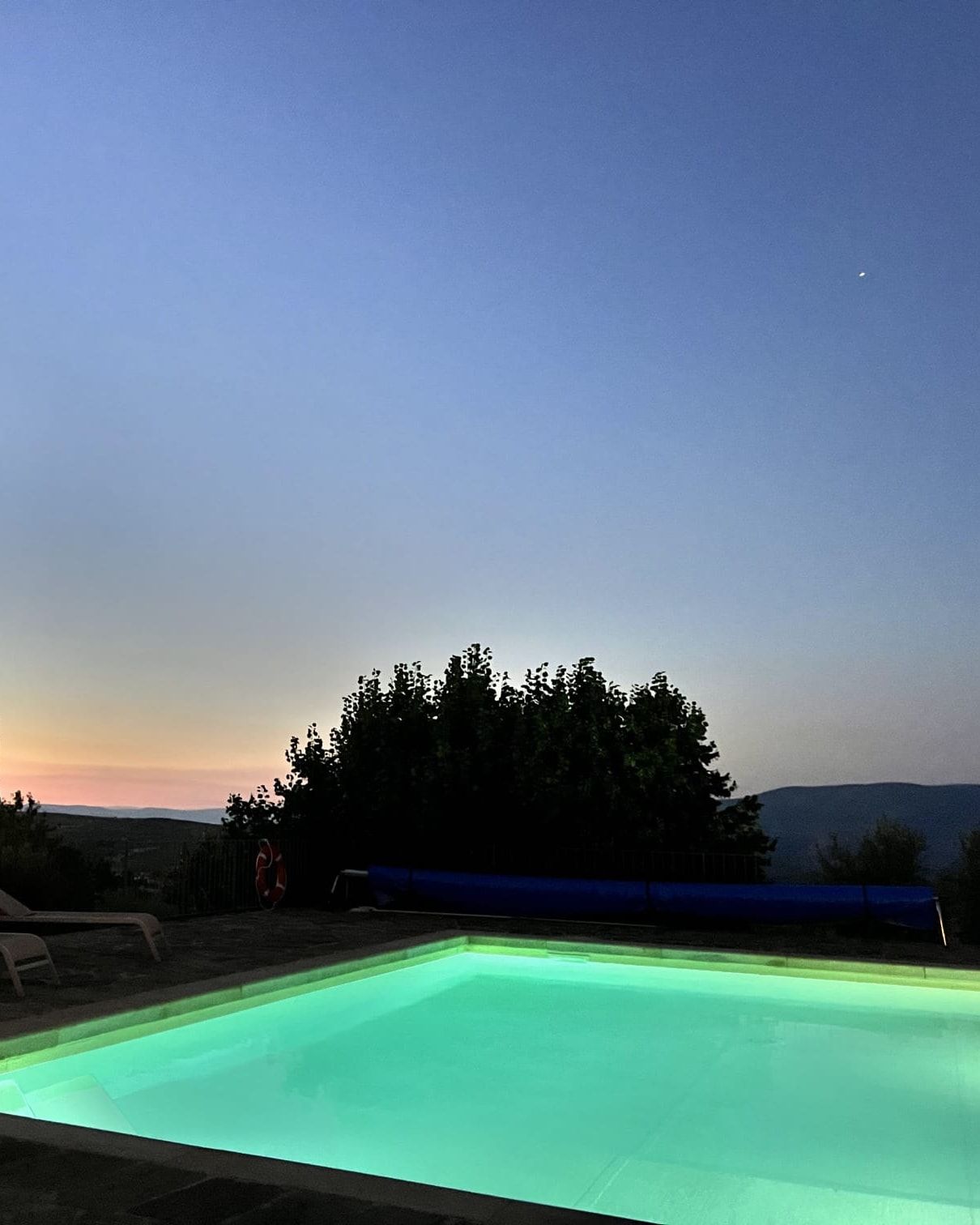
Four rooms on a quinta with a pool and views over the valley, 1.6 km from the Côa Museum. Rated 9.8 on Booking.com. Ask the hosts directly for availability.
Keep planning
-
-
-