Where is Vila Nova de Foz Côa and how to get there by plane, train or car
Why Foz Côa is listed under the Guarda district, northern Portugal and the Douro, how long it takes from each airport and city, and which roads charge tolls.
In short
Vila Nova de Foz Côa is in north-east Portugal, on the south bank of the Douro where the river Côa flows into it. The nearest airport is Porto, 202 km and about 3 hours away by car; Lisbon airport is 382 km, about 5 hours. By train, the Douro line from Porto ends at Pocinho, 8 km from the town.
Practical information
- Where it is
- Guarda district; Norte region, Douro subregion; Upper Douro wine area
- From Porto airport
- 202 km, about 3h05 by car (A4, IC5, IP2)
- From Lisbon airport
- 382 km, about 5h by car (A1, A23, A25, IP2)
- From Madrid
- 402 km, about 5h40 by car, via Salamanca and Vilar Formoso
- By train
- Douro line from Porto to Pocinho, 8 km from the town
- Tolls
- None on the A4 east of Amarante, the A23 or the A25 since 1 January 2025
- Tourist office
- +351 924 448 312, turismo@cm-fozcoa.pt
In this article
The quickest way to get to Vila Nova de Foz Côa from abroad is to fly into Porto and drive about 3 hours east, or to take the Douro line train from Porto to Pocinho, 8 km from the town. Foz Côa is in north-east Portugal, on the south bank of the Douro, where the river Côa flows into it. From Lisbon airport the drive takes about 5 hours, and from Madrid between 5h40 and 6 hours.
Where is Vila Nova de Foz Côa
The municipality belongs to the Guarda district, but maps and guidebooks often file it under the Douro. Both are right, because Portugal has several divisions that do not overlap:
| Division | Where Foz Côa is |
|---|---|
| District (administrative) | Guarda |
| Statistical region (EU NUTS II and III) | Norte, Douro subregion |
| Old province (1936 division) | Trás-os-Montes e Alto Douro |
| Douro Demarcated Region (wine) | Douro Superior (Upper Douro), the easternmost subregion, which runs to the border |
That is why Foz Côa is sometimes grouped with the Beiras, in central Portugal, and sometimes with the Douro. In practice it is closer to the Douro than to its district capital: Guarda is 76 km away (1h20 by car), while Pocinho and the Douro line are 8 km away. The municipality has 14 parishes (freguesias) and two UNESCO World Heritage Sites: the Côa Valley rock art, inscribed in 1998, and the Alto Douro Wine Region. The town council publishes a tourist map in PDF, in Portuguese, showing the town, the villages and the viewpoints.
Flying in: Porto, Lisbon or Madrid airport
| Airport | Distance | Driving time | Main roads |
|---|---|---|---|
| Porto | 202 km | 3h05 | A4, IC5, IP2 |
| Lisbon | 382 km | 5h00 | A1, A23, A25, IP2 |
| Madrid-Barajas | 418 km | 5h55 | A-6, AP-6, AP-51, A-50, A-62 |
Porto airport is the closest. If you are not hiring a car, take the metro (line E, the violet line) to Campanhã station and catch the Douro line train from there. From Lisbon or Madrid, the simplest option is to hire a car. If you are coming a long way and would rather break the journey, our article on where to stay in the Douro Valley compares Porto, Régua, Pinhão and the Upper Douro.
Train from Porto to Pocinho
The Douro line run by CP, the Portuguese railway company, ends at Pocinho, 8 km from Vila Nova de Foz Côa. Between 3 November 2026 and 24 March 2027 the line is being electrified between Marco de Canaveses and Régua, and CP runs replacement buses on that stretch: passengers change at Caíde or Marco and get back on the train at Régua. Infraestruturas de Portugal, which manages the rail network, expects trains to return on 25 March 2027.
The timetable in force since 3 November 2026 has four connections a day in each direction:
| Leaves Porto Campanhã | Arrives Pocinho | Leaves Pocinho | Arrives Porto Campanhã |
|---|---|---|---|
| 07:30 | 12:32 | 06:08 | 10:20 |
| 09:30 | 14:29 | 09:20 | 13:30 |
| 13:30 | 18:17 | 12:52 | 17:35 |
| 17:30 | 21:13 | 16:09 | 20:20 |
The journey takes between 3h43 and 5h04, depending on the wait at Régua. The replacement bus does not carry bicycles, scooters or wheelchairs. Tickets are sold on cp.pt and in the CP app; Pocinho has no ticket office, so buy your return before leaving Porto. From Lisbon, you first have to get to Porto Campanhã and then make this journey, which takes the whole day. Always check the timetable on cp.pt before buying your ticket, especially after March 2027, when CP will change the timetables again.
From Pocinho station to the town
Pocinho to Vila Nova de Foz Côa is 8 km, about 15 minutes by car and uphill most of the way. Do not count on a bus meeting the train. Book a taxi in advance; the town council’s tourist office (+351 924 448 312) can give you the numbers. Guests at Quinta Alto da Fraga can ask to be picked up at the station, at an extra cost.
Driving times to Foz Côa
| Starting point | Distance | Driving time | Main roads |
|---|---|---|---|
| Porto (Avenida dos Aliados) | 195 km | 3h00 | A4, IC5, IP2 |
| Braga | 207 km | 3h10 | A11, A4, IC5, IP2 |
| Coimbra | 191 km | 2h55 | IP3, A25, IP2 |
| Lisbon (Praça do Comércio) | 392 km | 5h10 | A1, A23, A25, IP2 |
| Salamanca | 193 km | 3h00 | A-62, N332, N222 |
| Madrid (Puerta del Sol) | 402 km | 5h40 | A-6, AP-6, AP-51, A-50, A-62 |
These times add 15% to the figures calculated from OpenStreetMap data, to allow for the mountain roads, and do not include stops. Some drivers do it faster on an empty road, but these are the times to plan with.
Driving from Porto
From Porto, the fastest route follows the A4 past Vila Real to the IC5 exit (signposted Alijó and Miranda do Douro). The IC5 heads east to near Vila Flor, a short stretch of the N215 links to the IP2, and the IP2 runs south through Torre de Moncorvo, crosses the Douro at Pocinho and enters Foz Côa. That makes 195 km. From Braga, the A11 joins the A4 near Amarante and the rest of the route is the same: 207 km, about 3h10.
Driving from Lisbon
From Lisbon, the A1 takes you to Torres Novas, the A23 climbs through the Beira Interior to Guarda, and the A25 runs about 16 km towards Celorico da Beira as far as the junction with the IP2. From there it is 51 km north, passing close to Trancoso, to Foz Côa: 392 km in all.
From Coimbra, the route takes the IP3 towards Viseu, then the A35 and the N234 to Mangualde, the A25 to near Celorico da Beira and the IP2 to the town: 191 km, under 3 hours. That is the same time as from Porto, although it looks further on the map.
Driving from Spain: Salamanca and Madrid
From Salamanca, the A-62 takes you to the border at Fuentes de Oñoro and Vilar Formoso. The shortest route continues on the N332 through Almeida and Figueira de Castelo Rodrigo, then on the N222, which passes Castelo Melhor before reaching Foz Côa: 193 km, about 3 hours. If you would rather stay on motorway for longer, take the A25 to the IP2 and head north: 228 km and about 10 minutes more.
From Madrid, the route leaves on the A-6 and the AP-6 (Guadarrama tunnel), passes Ávila on the AP-51 and reaches Salamanca on the A-50: 402 km from the city centre, 418 km from Barajas. There is no practical rail connection between Spain and Foz Côa, so this trip is made by car.
Tolls on the way
Since 1 January 2025, under Law 37/2024, tolls (portagens) are no longer charged on the former SCUT motorways in inland Portugal. On the way to Foz Côa that includes the A4 east of Amarante (the Marão tunnel and the Transmontana section), the A23, and the A25 between Albergaria and Vilar Formoso. The IC5, the IP2 and the national roads (marked N) have no tolls.
You still pay on the A4 between Porto and Amarante, the A1 between Lisbon and Torres Novas and the A11 from Braga, so from Porto the only tolled stretch of the route is the A4 as far as Amarante. In Spain, the AP-6 and AP-51 are toll roads (peajes), under a concession that ends in 2029; the A-6, A-50 and A-62 are free dual carriageways (autovías), which means the drive from Salamanca has no tolls at all. Prices change every year, and an online toll calculator gives the current figures.
Bus to Vila Nova de Foz Côa
The town has a bus station and is one of the destinations of Rede Expressos, a Portuguese long-distance coach company, but departures are few and journeys long; check the route, times and fares at rede-expressos.pt. FlixBus does not stop in Vila Nova de Foz Côa. Local Transdev buses link the town with the villages and run only a few days a week: outside school term, the one that passes Pocinho runs only on Tuesdays and Fridays, in the morning and around midday, with no connection to the trains.
From Quinta Alto da Fraga
The quinta is on Rua do Museu in Vila Nova de Foz Côa, 900 metres from the town centre, 1.6 km from the Côa Museum and 8 km from Pocinho station (15 minutes by car). If you leave Porto by car before 09:00, or Lisbon before 08:00, you arrive around lunchtime with the afternoon free for the museum. By train, the connection that reaches Pocinho at 12:32 leaves you the whole afternoon; the 21:13 arrival suits those who just want to get there and start the next day. For the days that follow there is a 2- and 3-day itinerary from Foz Côa, and the rooms and the booking request are on the quinta’s own pages.
Frequently asked questions
What is the nearest airport to Vila Nova de Foz Côa?
Porto airport, 202 km away, about 3h05 by car. Lisbon airport is 382 km away (about 5 hours) and Madrid-Barajas 418 km (nearly 6 hours). From Porto airport you can also take the metro to Campanhã station and catch the Douro line train there.
Is there a direct train from Porto to Foz Côa?
The train does not reach the town: the Douro line ends at Pocinho, 8 km away. Until 24 March 2027, because of engineering works, CP runs a bus on the stretch between Caíde or Marco de Canaveses and Régua. The journey from Porto to Pocinho takes between 3h43 and 5h04.
How long is the drive from Porto to Foz Côa?
It is 195 km on the A4, IC5 and IP2. Allow about 3 hours without stops, which already includes a margin for the mountain roads. The A4 is tolled between Porto and Amarante; beyond that, including the Marão tunnel, it has been toll-free since 2025.
Is Vila Nova de Foz Côa in the Guarda district or in the Douro?
Both. The municipality belongs to the Guarda district, but in Portugal's statistical regions (NUTS) it is in the Norte region and the Douro subregion. In the Douro wine region it lies in the Douro Superior (Upper Douro), the easternmost part, which runs to the Spanish border.
Are there buses to Vila Nova de Foz Côa?
Only a few. The town has a bus station and is one of the Rede Expressos destinations, with few departures a day; check the route and times on the company's website. FlixBus does not stop in Foz Côa. Local buses serve the villages and are not timed to meet the trains at Pocinho.
Sources
- Vila Nova de Foz Côa town council: tourist map of the town and municipality (Portuguese)
- Wikipedia (Portuguese): Vila Nova de Foz Côa
- IVDP: characteristics of the Douro Demarcated Region
- CP: Douro line timetable in force since 3 November 2026
- DN/Lusa: Douro line services suspended between Marco and Régua (12 October 2026)
- Vila Nova de Foz Côa town council: local bus timetables outside school term
- ECO: end of tolls on the former SCUT motorways (Law 37/2024)
- Postal do Algarve: A25 sections where tolls are still charged
- DN: A1 tolls between Lisbon and Porto in 2026
- Motorpasión: end of the AP-6 and AP-51 toll concession in 2029
- Porto City Council: airport metro line extended to Campanhã
- Rede Expressos
- FlixBus Portugal: cities served
- OSRM and OpenStreetMap (distance and travel time calculations)
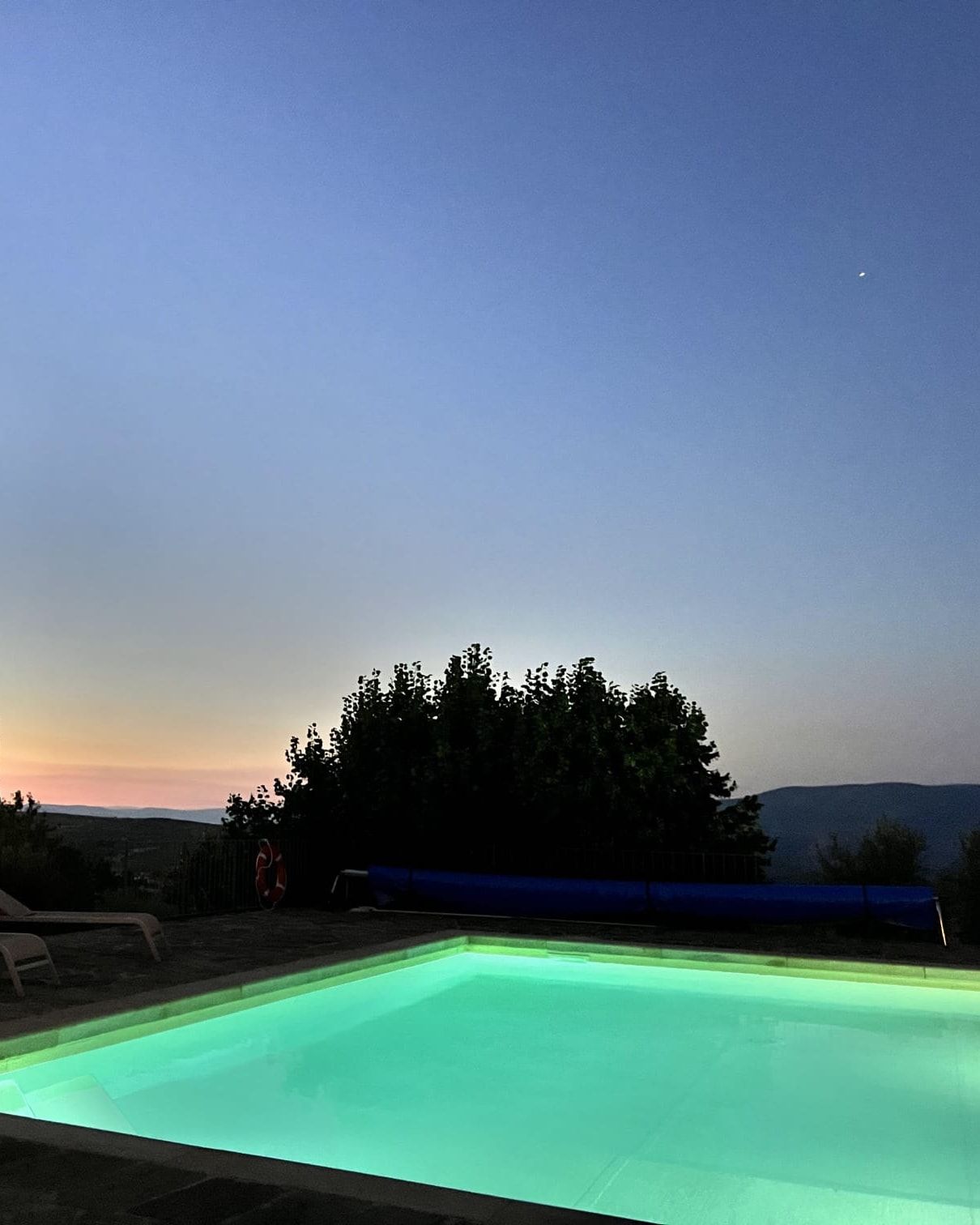
Stay in the middle of the Côa Valley
Four rooms on a quinta with a pool and views over the valley, 1.6 km from the Côa Museum. Rated 9.8 on Booking.com. Ask the hosts directly for availability.
Keep planning
-
-
-