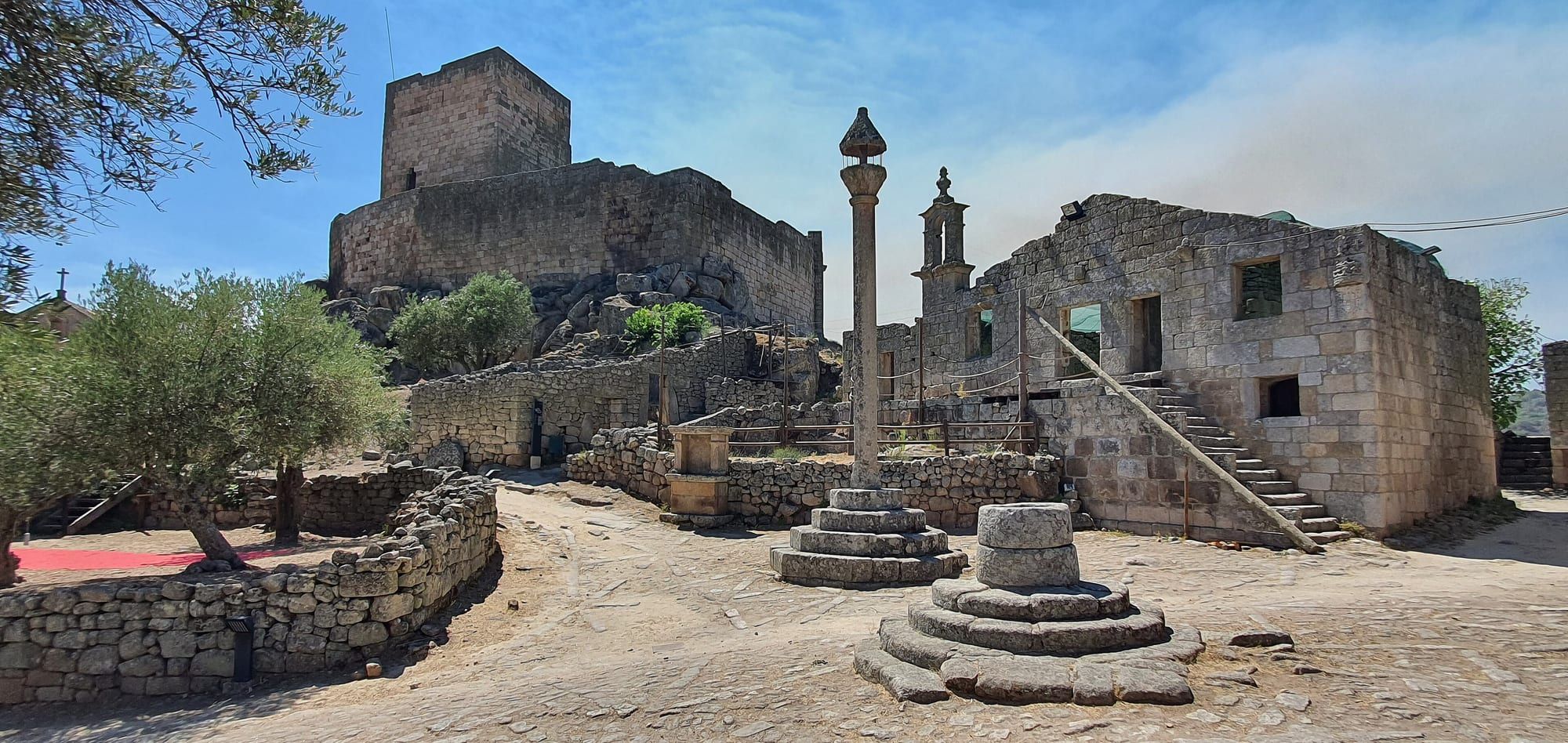
Faia Brava Nature Reserve: how to visit, what wildlife to see and where it is
Portugal's first private protected area lies in the Côa valley, 35 minutes from Vila Nova de Foz Côa. How to get in, who to ask for a visit and what has changed since ATN became Faia Brava.
In short
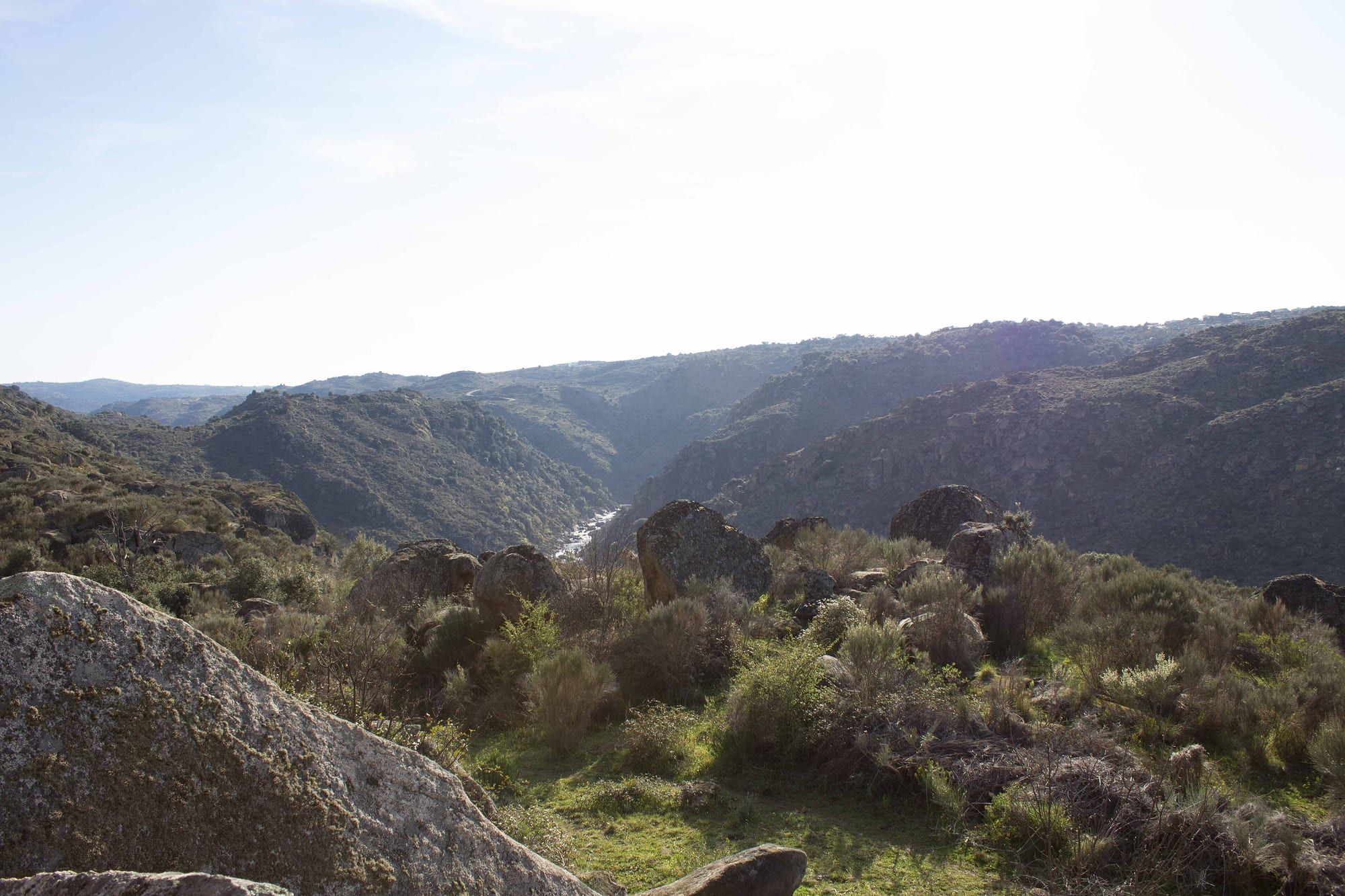
Faia Brava Nature Reserve lies in the Côa valley, between Algodres (Figueira de Castelo Rodrigo) and Cidadelhe (Pinhel), 26 km from Vila Nova de Foz Côa. It is run by the Faia Brava association, formerly ATN. You can walk through it on the Côa Valley Grand Route (GR45) or book a guided birdwatching visit on +351 271 311 202 or at geral@faiabrava.pt.
Practical information
- Where
- Côa valley, Figueira de Castelo Rodrigo and Pinhel municipalities (Guarda district)
- Run by
- Faia Brava, Associação de Conservação da Natureza (formerly ATN)
- Bookings
- +351 271 311 202 or +351 914 678 375 · geral@faiabrava.pt
- Office
- Figueira de Castelo Rodrigo, Monday to Friday, 9am to 5pm
- Price
- Not published; ask when you book
- Best time for birds
- April to June
- From the quinta
- 26 km, 35 min by car to Algodres
In this article
Faia Brava Nature Reserve is Portugal’s first private protected area: around 850 hectares of granite cliffs in the Côa valley, between Figueira de Castelo Rodrigo and Pinhel, where griffon vultures, Egyptian vultures and eagles nest and Garrano horses graze freely. You can visit it on foot along the Côa Valley Grand Route (GR45, a long-distance waymarked trail) or by booking with the association that runs it. The north entrance, at Algodres, is 26 km from Vila Nova de Foz Côa.
Where is Faia Brava?
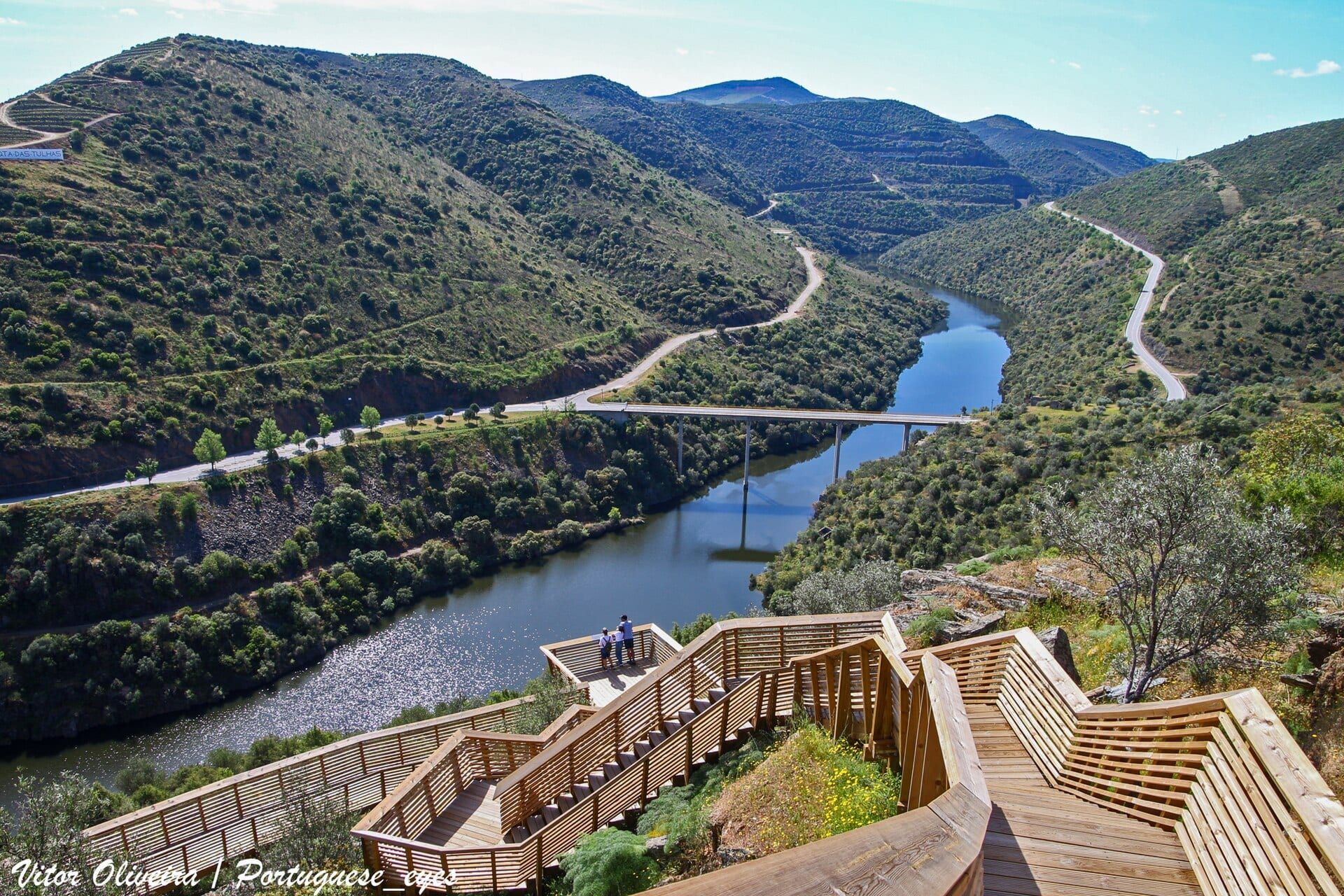
The reserve covers both banks of the River Côa, upstream of the Côa Valley Archaeological Park, in the parishes of Algodres (Figueira de Castelo Rodrigo municipality) and Cidadelhe (Pinhel municipality), in the Guarda district. In 2010 it was classified as the country’s first private protected area by what was then the Instituto da Conservação da Natureza e da Biodiversidade, the national nature conservation agency. It lies within the Côa Valley Special Protection Area, part of the Natura 2000 network, which was created because of the birds that nest on the cliffs.
There are two practical entrances:
- North, through Algodres, off the N332 road between Figueira de Castelo Rodrigo and Foz Côa.
- South, on the M607 road between Cidadelhe and Mêda, by the bridge over the Côa, where the GR45 enters the reserve through a gate.
Inside there are only rough farm tracks, so leave the car at the entrance.
Who runs the reserve and what has changed
The reserve belongs to a non-profit association based in Figueira de Castelo Rodrigo, founded in 2000 as the Associação Transumância e Natureza (ATN). In 2024 its members renamed it Faia Brava, Associação de Conservação da Natureza, and in 2026 a new board took office.
The old atnatureza.org website no longer belongs to the association and shows content unrelated to the reserve, but many blogs and guides still link to it, including for visit prices. The current website is faiabrava.com and the contact details are:
- Phone +351 271 311 202 or mobile +351 914 678 375
- Email geral@faiabrava.pt
- Office at Rua Pedro Jacques de Magalhães 3, Figueira de Castelo Rodrigo, open Monday to Friday, 9am to 5pm
What animals can you see at Faia Brava?
Cliff-nesting birds are the reason the reserve was classified. Turismo Centro de Portugal, the regional tourist board, and the Fundação Côa Parque highlight the griffon vulture, the Egyptian vulture, the golden eagle and Bonelli’s eagle. Black storks and eagle owls also breed here, and black wheatears and alpine swifts can be seen on the rocks. The Egyptian vulture spends the winter in Africa, so you will only see it from spring to the end of summer; the griffons are here all year. The association takes part in the LIFE Aegypius Return project (2022 to 2027), which works to establish the cinereous vulture in Portugal.
Garrano horses and hardy breeds of cattle graze the slopes in semi-freedom, under a rewilding model run with Rewilding Europe since 2011. In 2015 a fenced area of 600 hectares was opened and there were 53 Garranos in the reserve. By eating the scrub, these animals reduce the fuel for wildfires; Rewilding Europe calls them “grazing fire brigades”. The association also plants woods of native species and restores the montado, the wood pasture of cork oaks and holm oaks.
There are otters in the river, which the Fundação Côa Parque mentions on its kayak trips further downstream, though you need luck to see one.
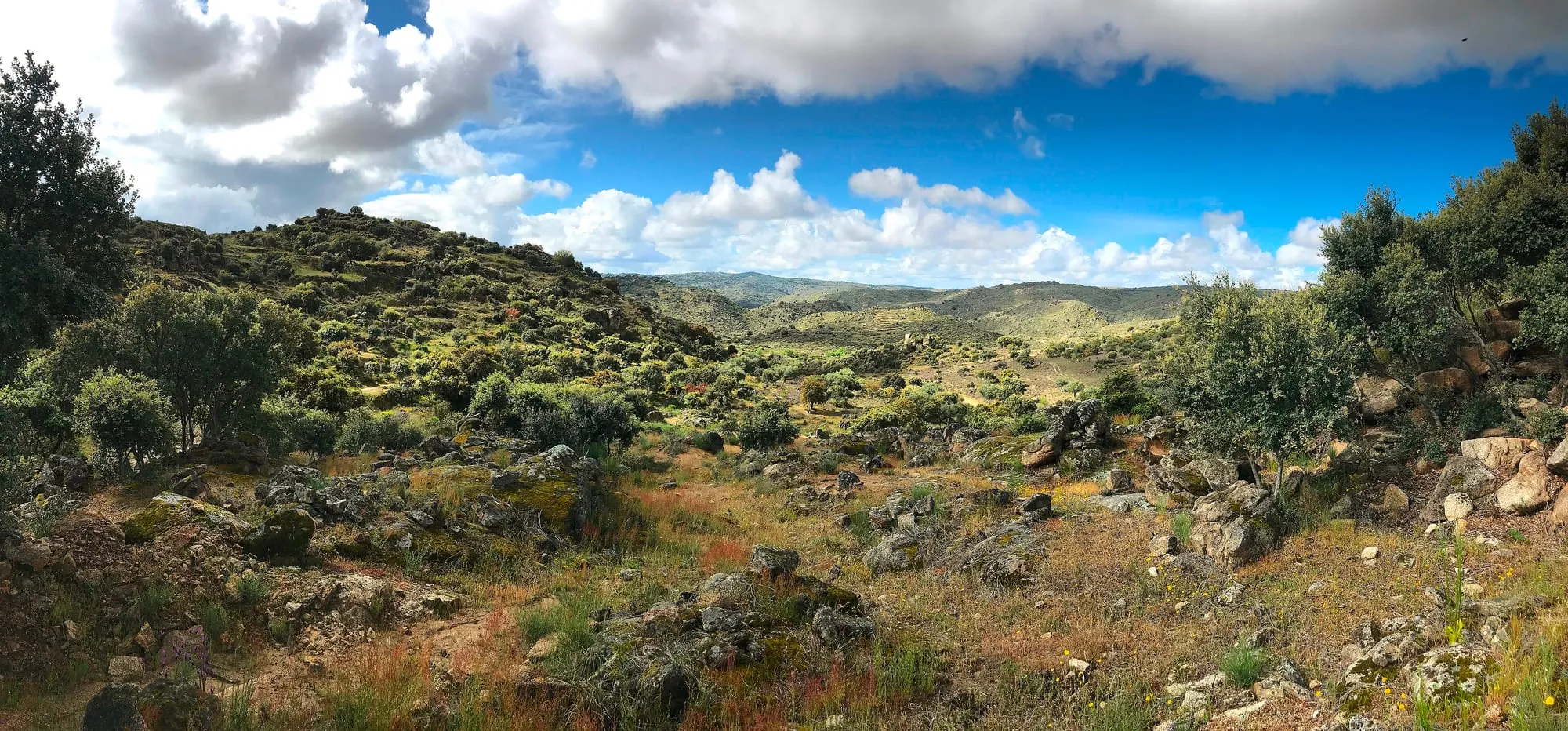
Photo: Frank Vassen, CC BY 2.0, Wikimedia Commons
How to visit Faia Brava
On foot and on your own, along the GR45
The Côa Valley Grand Route crosses the reserve on stage 9, from Cidadelhe to Algodres: 12.8 km, about 3 hours, difficulty 3 on a scale of 0 to 5, with 437 m of total ascent. The trail drops from Cidadelhe to the Côa, crosses the Ponte da União bridge and climbs by road to the reserve entrance. From there it follows forest tracks and footpaths among cork and holm oaks, passes a cork oak over a hundred years old, with views of the sheer cliffs above the river, and reaches Algodres through olive groves, almond orchards and vineyards.
As it is a linear route, you need someone waiting at the end or a taxi; the stage page on the GR45 website lists taxi contacts in Algodres, Figueira de Castelo Rodrigo and Foz Côa. For a shorter walk, the Aves de Portugal website suggests going in through the south gate, by the M607, following the GR45 along the river and turning back at Hortas da Sabóia, a rest area with shade, tables and toilets. There is more on each stage in our guide to hiking trails in Foz Côa.
With a guide: birdwatching and the hide
The official GR45 website promotes a 4-hour birdwatching programme in the reserve, with guides, optics, 4x4 transport and insurance, booked directly with the association on +351 271 311 202. The same page and the stage 9 description mention a photography hide next to a feeding station for carrion birds, where you sit out of sight and watch the vultures feed.
The association does not publish prices or fixed times. When you book, give the date, the number of people and whether you want to use the hide.
The combined visits page of the Côa Museum still mentions Faia Brava, but in November 2026 the list of available visits no longer includes the Penascosa and Faia Brava combination that used to be sold. Plan on booking the rock art visit and the reserve separately, or ask the museum’s booking office (+351 279 768 260).
Star Camp and stargazing
The Star Camp was a safari-style tented camp set up in the middle of the reserve and presented in 2015 with support from Rewilding Europe. Turismo Centro de Portugal still describes it as accommodation for six people, sleeping under the stars. In November 2026 the Star Camp is not listed on the association’s website and its events calendar is empty, so do not count on it without confirming by email.
The calendar does not announce any stargazing sessions for 2027 either. For camping, the GR45 stage 9 page mentions a campsite in the reserve for association members only; wild camping is banned along the whole Grand Route. If you want a confirmed night-time activity near Foz Côa, the Fundação Côa Parque runs the night visit to Penascosa.
Best time to go
For birds, the best time is April to June: it is the breeding season, the Egyptian vultures are back from Africa and it is not yet too hot to walk. The GR45 website recommends spring and autumn for walking. In summer the valley gets very hot, and between July and October, on days of high or maximum wildfire risk, access to parts of the trail may be restricted. In winter the griffons are still there, but mornings are cold and, after rain, some sections are slippery and there are streams to cross.
Rules in the reserve
The Côa Valley Grand Route code of conduct applies to anyone crossing the reserve:
- Always close gates behind you: horses and cattle roam semi-wild.
- Stay on the marked trail and do not go near nests or the cliffs.
- Do not feed wild animals or livestock.
- Do not camp outside authorised sites.
- Carry all the water you need and take your rubbish home: there are no bins on the trail.
- Do not smoke or light fires. In summer the fire risk is high, and on some days the law bans lighting fires in forest areas.
From Quinta Alto da Fraga
| Access point | Distance by car | Time |
|---|---|---|
| Algodres, north entrance | 26 km | 35 min |
| Association office, Figueira de Castelo Rodrigo | 36 km | 45 min |
| Côa bridge on the M607, south entrance | 37 km | 55 min |
| Cidadelhe, start of stage 9 | 40 km | 60 min |
To fit the visit into one day, you could leave the quinta at 8am, do the guided visit or the GR45 section in the morning, have lunch in Figueira de Castelo Rodrigo and spend the afternoon in Castelo Rodrigo, one of the Historic Villages of Portugal near Foz Côa. From Figueira de Castelo Rodrigo back to the quinta is a 45-minute drive. In July and August, do the walking early in the morning and keep the afternoon for the pool. There are more ideas for days out in the guide to the area.
Frequently asked questions
Can you visit Faia Brava without a guide?
Yes, on foot along the Côa Valley Grand Route. Stage 9 of the GR45, from Cidadelhe to Algodres, is 12.8 km long and crosses the reserve on paths waymarked in white and red. The vulture hide and the 4x4 routes are only available by booking with the association. Always close gates behind you, as there is livestock roaming free.
How much does a guided visit to Faia Brava cost?
In November 2026 the association had no published prices. The birdwatching programme promoted by the Côa Valley Grand Route lasts 4 hours and includes a guide, optics, 4x4 transport and insurance. You are given the price when you book, on +351 271 311 202 or at geral@faiabrava.pt.
Is the Faia Brava Star Camp still open?
The Star Camp, a safari-style camp launched in 2015 with support from Rewilding Europe, does not appear on the association's website in November 2026. Before you count on it, email geral@faiabrava.pt to ask whether it is open and on which dates.
What animals can you see at Faia Brava?
Cliff-nesting birds are the reason for the reserve: griffon vultures, Egyptian vultures, golden eagles, Bonelli's eagles, black storks and eagle owls. Garrano horses and cattle graze the slopes in semi-freedom as part of the rewilding project. Otters live in the River Côa, though they are harder to spot.
Are ATN and Faia Brava the same association?
Yes. The Associação Transumância e Natureza (ATN), founded in 2000 in Figueira de Castelo Rodrigo, changed its name in 2024 to Faia Brava, Associação de Conservação da Natureza. The old atnatureza.org address no longer belongs to the association; the current website is faiabrava.com.
Sources
- Faia Brava, Associação de Conservação da Natureza (contacts, history, governing bodies)
- Faia Brava, the association's projects
- Grande Rota do Vale do Côa, walking stages (stage 9, Cidadelhe to Algodres)
- Grande Rota do Vale do Côa, guided visits
- Grande Rota do Vale do Côa, preparing for the walk and code of conduct
- Turismo Centro de Portugal, Faia Brava Natural Reserve
- Fundação Côa Parque, leisure activities and Special Protection Area
- Fundação Côa Parque, kayak visit (Côa wildlife)
- Fundação Côa Parque, combined visits
- Rewilding Europe, pre-launch of the Faia Brava Star Camp (2015)
- Aves de Portugal, Faia Brava (access and birdwatching spots)
- Wikipedia (Portuguese), Reserva da Faia Brava
Algodres, north entrance to Faia Brava, 35 minutes from the quinta
Four rooms on a quinta with a pool and views over the valley, 1.6 km from the Côa Museum. Rated 9.8 on Booking.com. Ask the hosts directly for availability.
Keep planning
-
-
-