Barca d'Alva: what to see, Douro cruises and the road to Salamanca
The last Portuguese quay for boats sailing up the Douro: which cruises get there and when, where the railway reopening stands, the Camino de Hierro on the Spanish side, the almond blossom, the viewpoints and the road to Salamanca.
In short
Barca d'Alva is a village in the municipality of Figueira de Castelo Rodrigo, where the Águeda, which forms the border with Spain, flows into the Douro. It has the quay where cruises from Régua and Porto end, from April to October, and the old Douro line station, closed since 1988. It is 125 km from Salamanca and 56 km from Vila Nova de Foz Côa.
Practical information
- Where
- Escalhão parish, Figueira de Castelo Rodrigo, at the mouth of the Águeda, facing Spain
- From the quinta
- 56 km, about 1h 05m by car on the EN222, EN332 and EN221
- Day cruises
- April to October; Régua and back from €111, Porto and back €135 (Cruzeiros Douro)
- Train
- No trains since 1988; preliminary study approved, no date for the works
- Salamanca
- 125 km, about 2 hours by car
- Camino de Hierro
- 17 km on foot in Spain, €8 per adult, book 3 days ahead, no children under 10
- Almond blossom
- February and March; Feira do Almendro in Barca d'Alva every year (early March in 2026)
- From Quinta Alto da Fraga
- 56 km, 65 min by car
In this article
Barca d’Alva is a village in the municipality of Figueira de Castelo Rodrigo, at the point where the river Águeda, which forms the border with Spain, flows into the Douro. It has the last Portuguese quay for boats sailing up the river, where the cruises from Régua and Porto end, and the old Douro line station, closed since 1988. In Barca d’Alva you can see the quay and the station; nearby there are viewpoints, almond trees in blossom in February and March and, on the Spanish side, the Camino de Hierro walk. Salamanca is 125 km away, and Quinta Alto da Fraga is 56 km, about 1h 05m by car.
Douro cruises to Barca d’Alva
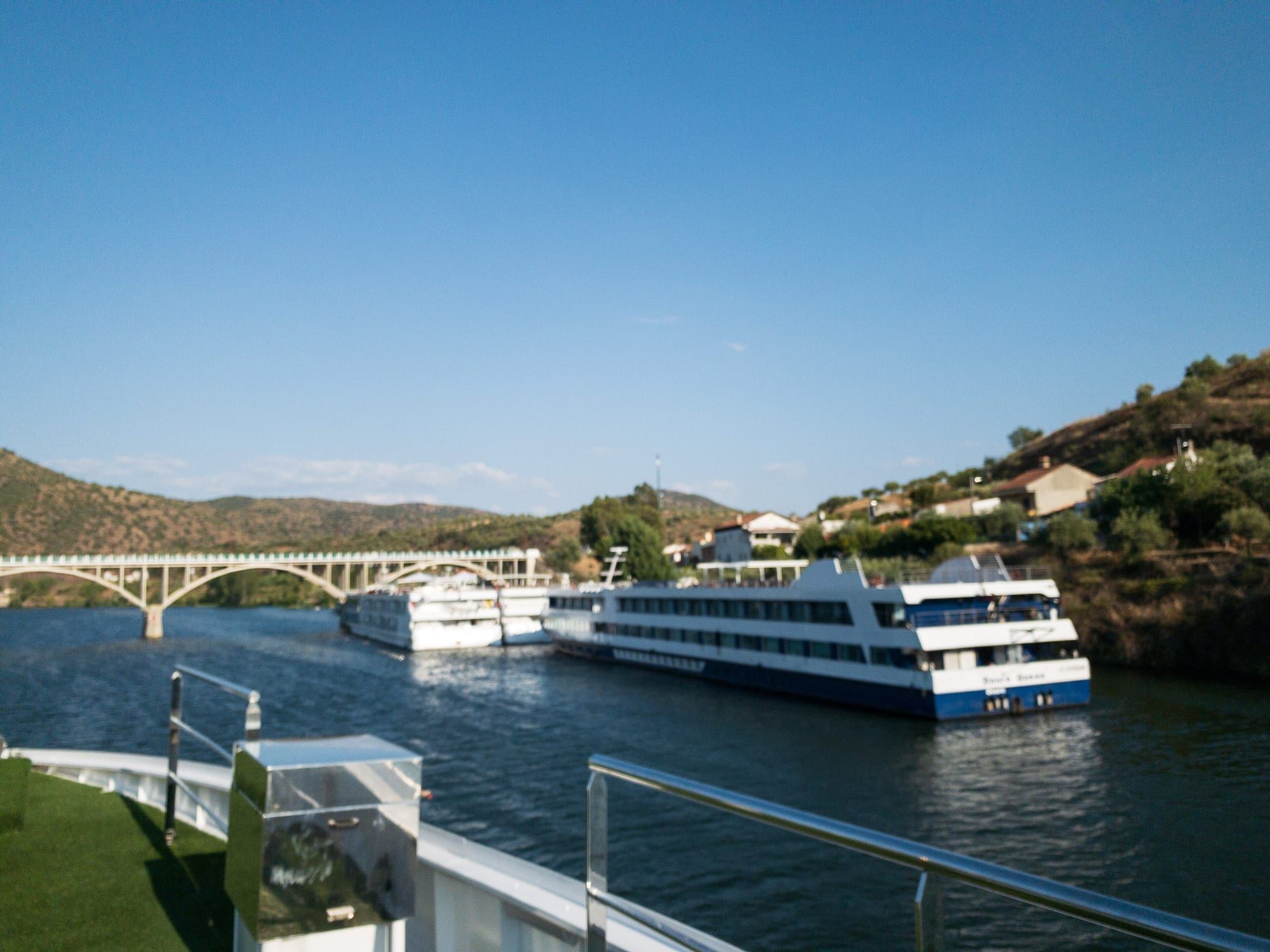
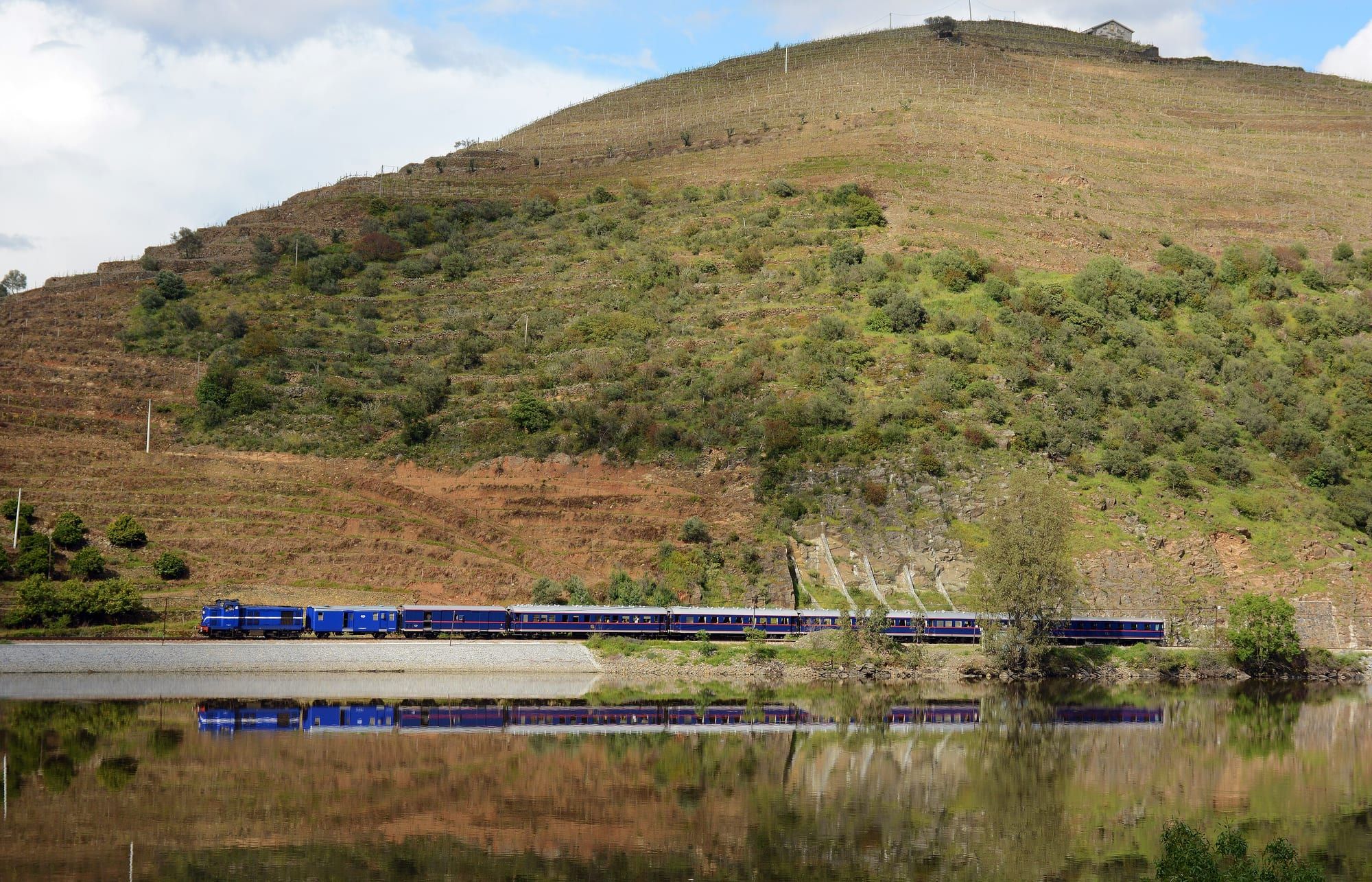
Boats reach Barca d’Alva after climbing through the locks of the Bagaúste, Valeira and Pocinho dams. Cruzeiros Douro only runs its day cruises from April to October, because the locks close for maintenance in the months of bad weather; Douro Azul does not publish dates on its website, so ask before you plan.
| Cruise | Operator | How it works | Price per adult |
|---|---|---|---|
| Régua, Barca d’Alva, Régua | Cruzeiros Douro | Upstream by boat at weekends, leaving Régua at 07:30, 08:30 or 09:00; back by coach, or by train if there are seats, reaching Régua at around 20:30 | €111 |
| Porto, Barca d’Alva, Porto | Cruzeiros Douro | Saturdays: meet at 07:00 at Campanhã station, coach to Régua, boat to Barca d’Alva (due at 17:30) and coach back, reaching Porto at 23:15 | €135 |
| Régua, Barca d’Alva, Régua | Douro Azul | Breakfast, port and lunch on board; on arrival, transfer to Pocinho station and train back to Régua | on request |
| Pocinho, Barca d’Alva, Pocinho | Foz Côa council (Senhora da Veiga) | 4 hours on the council’s rabelo, a traditional Douro boat, 26 km each way; minimum group of 25 people or the equivalent fare | €35 |
On both Cruzeiros Douro cruises, children aged 4 to 11 pay half and children up to 3 go free; both need a minimum number of passengers. The Senhora da Veiga is booked through the Foz Côa tourist information centre, +351 924 448 312. Multi-day hotel boats also sail this far: CroisiEurope, for example, has 2027 departures that stop at the Spanish quay of Vega Terrón, across the Águeda, with an optional excursion to Salamanca. According to Figueira de Castelo Rodrigo council, groups of about 100 people arrive at the quay every week and go on to the historic centre of the town of Figueira.
If you are staying in Foz Côa, the simplest option is to combine boat and train at Pocinho, where the Douro line train ends, 8 km from the quinta.
The old Barca d’Alva station
Barca d’Alva station opened on 9 December 1887, when the Douro line reached the border and connected with Salamanca through the Spanish line via La Fregeneda and La Fuente de San Esteban. The Spanish side closed on 1 January 1985 and the section between Pocinho and Barca d’Alva in 1988. The station has been out of use ever since, with the passenger building, the warehouses and the tracks a few metres from the Águeda.
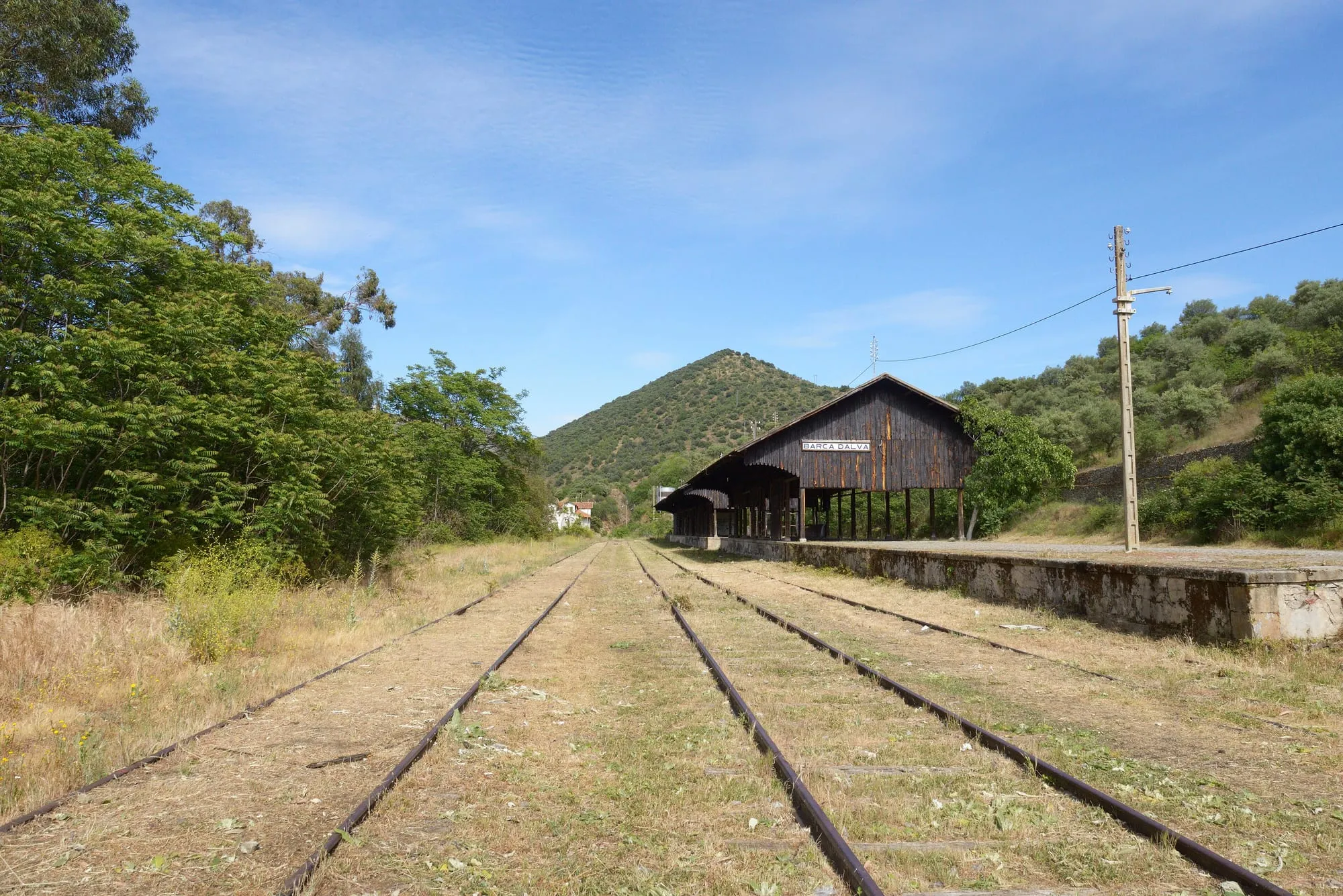
Photo: Alves da Silva, CC0, Wikimedia Commons
Will the Pocinho to Barca d’Alva line reopen?
As of November 2026 there is still no date. This is how the process has gone, according to Infraestruturas de Portugal (IP, the company that manages the Portuguese rail network), the town councils and the regional press:
- In May 2023 IP put the preliminary study and the detailed design out to tender, with a base price of €4.2 million. The project includes electrifying the whole section, restoring tunnels, bridges, buildings and platforms, and modernising the track.
- In July 2025 IP presented the completed preliminary study to Figueira de Castelo Rodrigo council. The council cites a study by CCDR Norte, the regional development commission for northern Portugal, which puts the investment at €70 million.
- In October 2026 the councils of Figueira de Castelo Rodrigo and Vila Nova de Foz Côa gave the preliminary study a favourable opinion. The work has still not been contracted and has no start date; the mayor of Figueira points to 2029 and wants the first phase to serve tourism.
There are 28.6 km of track between the two stations and, until the work is done, the train stops at Pocinho.
Camino de Hierro: the Spanish side of the line on foot
Across the Águeda, the old line between La Fregeneda station and the Vega Terrón quay, opposite Barca d’Alva, is now a walking route: 17 km of medium difficulty, with 20 tunnels that add up to more than 4 km. The rules, according to the official website:
- Booking is compulsory at least 3 days ahead, with a limit of 300 people a day.
- The standard ticket costs €8 and the reduced ticket €7 (under-16s, students, pensioners and large families).
- The ticket includes a reflective vest, a torch, insurance and transport between the Vega Terrón quay and La Fregeneda.
- Children under 10 are not admitted and everyone must carry at least a litre of water.
Tickets are validated at the Vega Terrón reception centre early in the morning. Spain is one hour ahead of Portugal, so allow for that when you leave Foz Côa. Autumn and winter hours are different from spring and summer hours, so check the Camino de Hierro website before you go.
Almond blossom and the Feira do Almendro
The almond trees in the municipality blossom in February and March, according to the council. In 2026 Figueira de Castelo Rodrigo’s Almond Blossom Festival (Festa da Amendoeira em Flor) took place on 27 and 28 February and on 1, 6, 7 and 8 March; it is usually held around these weeks, but the 2027 dates have not been announced. Barca d’Alva holds the Feira do Almendro every year, a traditional fair that brings Portuguese and Spanish people together; in 2026 the council reported on it on 2 March. For where to see the blossom, read the article on almond blossom in Portugal.
In measurements by the IVDP (Instituto dos Vinhos do Douro e do Porto, the Douro and port wine institute), Barca d’Alva is the driest point in the Douro Demarcated Region, with 380 mm of rain a year, compared with 1,200 mm at Fontes, in the Baixo Corgo. It also records the widest temperature ranges in the region.
Viewpoints near Barca d’Alva
| Viewpoint | Where | From Barca d’Alva | From the quinta |
|---|---|---|---|
| Alto da Sapinha | On the EN221, on the climb to Escalhão | 6 km | 50 km, 1 hour |
| Penedo Durão | Freixo de Espada à Cinta municipality, across the Sarmento Rodrigues bridge | 16 km | 57 km, 1h 20m |
| Serra da Marofa | Figueira de Castelo Rodrigo, at 977 metres, with a statue of Christ the King (Cristo Rei) | 27 km | 42 km, 1 hour |
Figueira de Castelo Rodrigo council recommends the Marofa, Sapinha and Santa Bárbara viewpoints. Sapinha is on the way if you come from Foz Côa on the EN221, so it is the easiest stop.
Barca d’Alva to Salamanca
Salamanca is about 125 km from Barca d’Alva, close to two hours by car on the Spanish side. On hotel boats, Salamanca is a day excursion with a return to the boat. From Vila Nova de Foz Côa to Salamanca it is 193 km, about three hours. Also on the Spanish side is the rock art site of Siega Verde, listed by UNESCO together with the Côa.
From Quinta Alto da Fraga
From the quinta to Barca d’Alva it is 56 km, about 1h 05m by car: the EN222 heading east, the EN332 to Figueira de Castelo Rodrigo and the EN221, which drops down to the river past the Sapinha viewpoint. It makes a full day out: in the morning Castelo Rodrigo, 38 km from the quinta, then the drive down to Barca d’Alva with a stop at Sapinha, the afternoon at the quay and the station, and the return to Foz Côa on the same road before dark.
Frequently asked questions
How do you get to Barca d'Alva by boat?
On a day cruise from Régua or Porto; Cruzeiros Douro sails between April and October. Cruzeiros Douro charges €111 from Régua and €135 from Porto, coming back by coach. Douro Azul sails up from Régua and brings passengers back by train from Pocinho.
Will the train return to Barca d'Alva?
There is no date yet. Infraestruturas de Portugal, which manages the rail network, has completed the preliminary study for reopening the 28 km between Pocinho and Barca d'Alva, with electrification, and the Figueira de Castelo Rodrigo and Foz Côa councils gave it a favourable opinion in October 2026. The work has not been contracted; the mayor of Figueira points to 2029.
How far is Salamanca from Barca d'Alva?
About 125 km by road, close to two hours by car, on the Spanish side. River cruise ships that stop at Barca d'Alva or at the Spanish quay of Vega Terrón usually offer Salamanca as an optional day excursion. From Vila Nova de Foz Côa to Salamanca it is 193 km, about three hours.
When are the almond trees in blossom at Barca d'Alva?
In February and March, according to Figueira de Castelo Rodrigo council. In 2026 the municipality's Almond Blossom Festival (Festa da Amendoeira em Flor) ran over the weekends of 27 February to 1 March and 6 to 8 March. Barca d'Alva holds the Feira do Almendro every year, which brings together Portuguese and Spanish people.
What is the Camino de Hierro?
The old railway line on the Spanish side, between La Fregeneda station and the Vega Terrón quay, opposite Barca d'Alva, now open to walkers: 17 km with 20 tunnels. You must book at least 3 days ahead; it costs €8 per adult, includes transport between Vega Terrón and La Fregeneda and does not admit children under 10.
Sources
- Douro Azul: Régua, Barca d'Alva, Régua cruise
- Cruzeiros Douro: Régua, Barca d'Alva, Régua
- Cruzeiros Douro: Porto, Barca d'Alva, Porto
- CroisiEurope: Lisbon, Porto, the Douro and Salamanca
- Foz Côa tourist office: Senhora da Veiga boat
- Figueira de Castelo Rodrigo Municipality: visit
- Figueira de Castelo Rodrigo Municipality: Douro line preliminary study (8 July 2025)
- Figueira de Castelo Rodrigo Municipality: Feira do Almendro (2 March 2026)
- Figueira de Castelo Rodrigo Municipality: visitors arriving at the Barca d'Alva quay (7 November 2025)
- Figueira de Castelo Rodrigo Municipality: 2026 Almond Blossom Festival rules (PDF)
- Jornal A Guarda: councils approve preliminary study for Pocinho to Barca d'Alva (29 October 2026)
- Infraestruturas de Portugal: tender for the Pocinho to Barca d'Alva section (11 May 2023)
- CP: The Douro line
- Wikipedia (Portuguese): Barca de Alva railway station
- Camino de Hierro (Diputación de Salamanca)
- Camino de Hierro: prices
- Turismo de Castilla y León: SA2 Iron Road
- IVDP: features of the Douro Demarcated Region
- VisitPortugal: Penedo Durão viewpoint
Barca d'Alva, 65 minutes from the quinta
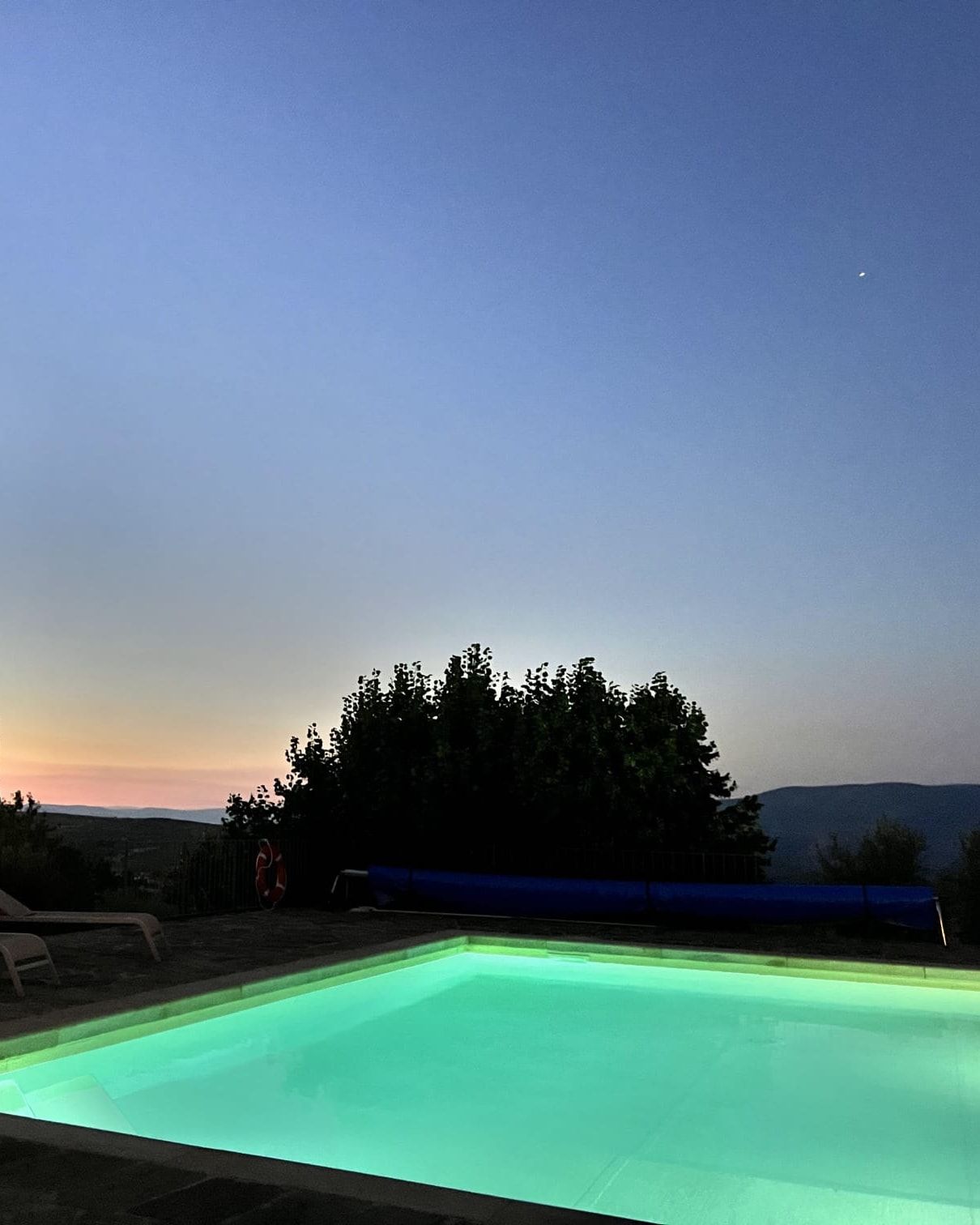
Four rooms on a quinta with a pool and views over the valley, 1.6 km from the Côa Museum. Rated 9.8 on Booking.com. Ask the hosts directly for availability.
Keep planning
-
-
-